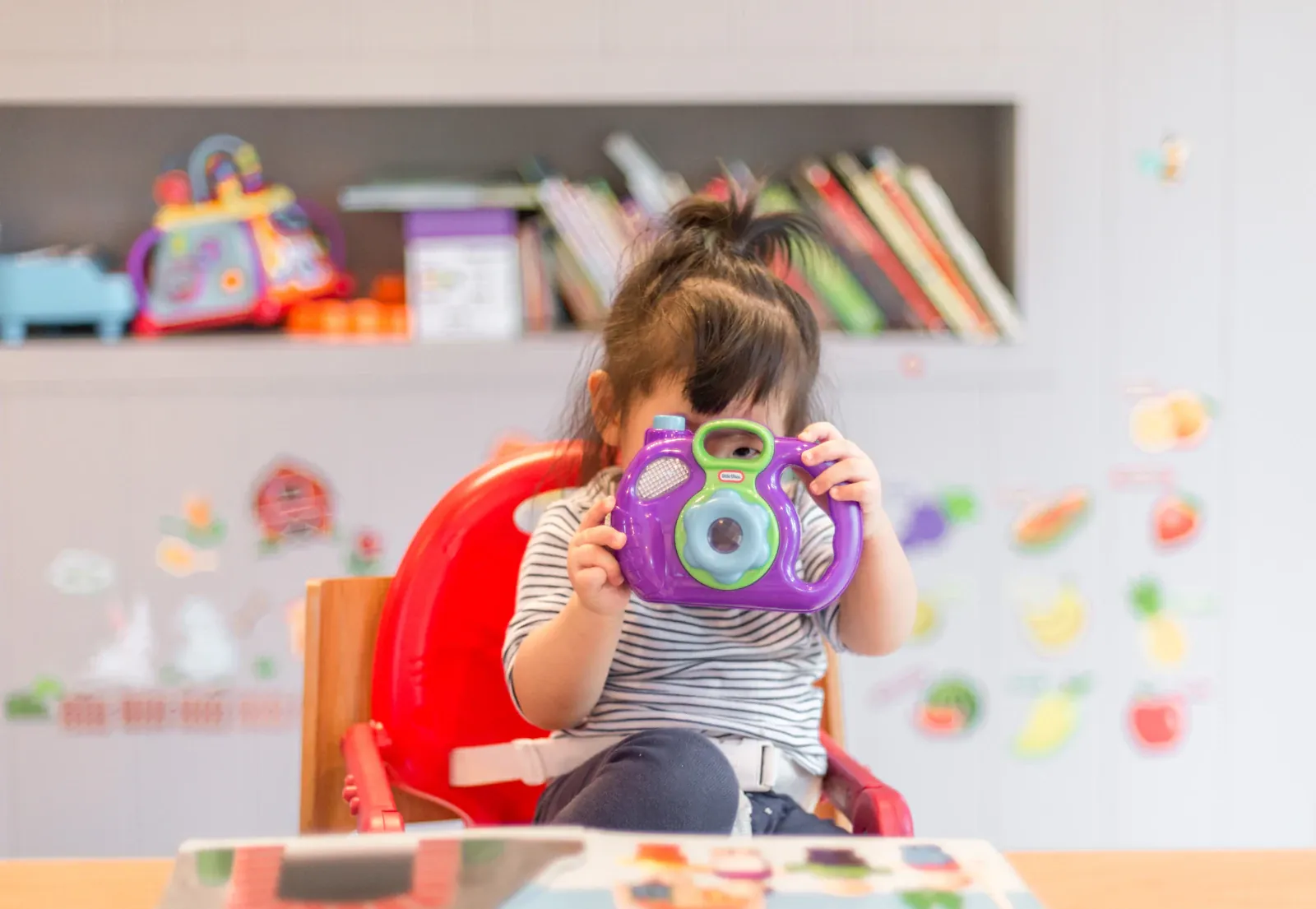
You already know this kid — the one who wants to know how everything works, who asks questions that take ten minutes to answer properly, and who turned the kitchen into a lab at least twice before their last birthday. Finding the right gifts for kids who love science sounds easy until you start clicking through generic sets that are either too basic to hold their attention for more than an afternoon or too complicated to use without a parent on standby. The best science gifts for kids do two things at once: they are genuinely fun to use on day one, and they teach something real in the process. This guide brings together seven carefully chosen picks — all priced between $18 and $65 — that a curious, hands-on child will reach for, experiment with, and come back to time and again.
All 7 picks, compared
| Gift | Price | Best for | Link |
|---|---|---|---|
| Snap Circuits Jr. SC-100 Electronics Exploration Kit | ~$35 | building real electronic circuits | Check price |
| National Geographic Mega Fossil Dig Kit | ~$18 | young fossil hunters | Check price |
| Osmo Genius Starter Kit for iPad | ~$65 | hands-on learners with an iPad | Check price |
| Thames & Kosmos Kids First Chemistry Set | ~$38 | kids who love mixing experiments | Check price |
| Learning Resources Primary Science Lab Activity Set | ~$25 | open-ended experiments | Check price |
| 4M Kidzlabs Green Science Solar Rover Kit | ~$22 | learning how solar power works | Check price |
| National Geographic Hobby Rock Tumbler Kit | ~$50 | rock collectors | Check price |
7 Best Gifts for Kids Who Love Science
Snap Circuits Jr. SC-100 Electronics Exploration Kit
~$35Best for: building real electronic circuits
The Snap Circuits Jr. is the science kit that consistently earns top marks from both children and parents because it solves the central problem with most electronics sets for kids: the components are colour-coded and snap together like building blocks, so a child can follow the illustrated manual and build a working fan, alarm, or flashing light without needing an adult to translate the instructions. The set includes over 30 parts — switches, resistors, LEDs, a speaker, a motor, and more — that combine across 100 different working circuit projects at escalating difficulty levels, so a child who powers through the beginner builds in an afternoon still has dozens of more challenging ones waiting. The snap mechanism is durable enough to survive hundreds of assembly and disassembly cycles without losing its connection quality, and the large plastic modules are easy to handle with small fingers even when building complex multi-component circuits. For a child who has ever asked how a light switch works, how a doorbell triggers, or how a motor spins, the Snap Circuits Jr. is the gift that finally lets them find out by building it themselves.
- 100 projects across beginner to intermediate difficulty — keeps a curious child building, experimenting, and learning for far longer than a single-project science kit that exhausts its possibilities in one sitting
- Colour-coded snap-together components require no tools, no soldering, and no adult interpretation — a child aged 8 and up can follow the illustrated manual and build real working circuits independently from the very first session
- Durable snap mechanism withstands hundreds of build-and-rebuild cycles without degrading — the components work just as reliably on the fiftieth project as they do on the first
This is the gift for the kid who has always wanted to understand electricity — the Snap Circuits Jr. turns that curiosity into 100 hands-on experiments they can build, test, and rebuild entirely on their own.
National Geographic Mega Fossil Dig Kit
~$18Best for: young fossil hunters
The National Geographic Mega Fossil Dig Kit delivers genuine excavation experience at a price that makes it an easy yes — and unlike cheaper dig kits that produce small, unidentifiable fragments, this one includes real fossilised specimens embedded in solid excavation blocks alongside the tools and a field guide for identifying every discovery. The kit comes with two excavation blocks containing multiple genuine fossil specimens including shark teeth, ammonite, shells, and plant fossils, plus a detailed learning guide that explains how each organism lived, where it was found, and what it tells us about prehistoric life on Earth. The included goggles, a chisel tool, and a brush make the whole excavation process feel like a real archaeological dig rather than a toy version of one — which matters enormously to a child who takes their scientific interests seriously. The digging process takes approximately two to three hours per block, enough to be genuinely challenging and satisfying without becoming frustrating, and the finished specimens are display-worthy rather than something to be thrown away once the kit is done.
- Real fossilised specimens — shark teeth, ammonites, shells, plant fossils — embedded in excavation blocks, not plastic replicas or plaster pieces that crumble on first contact with a tool
- Includes goggles, chisel, and excavation brush alongside a detailed identification and learning guide — everything needed for a complete, self-directed dig experience straight out of the box
- Two blocks with multiple specimens each provide approximately four to six hours of excavation activity — the best-value hands-on science gift at its price point by a considerable margin
This is perfect for the child who has been fascinated by dinosaurs and prehistoric life — the National Geographic Mega Fossil Dig Kit gives them real specimens to excavate, identify, and keep, turning a passive interest into a genuinely active, tactile science experience.
Osmo Genius Starter Kit for iPad
~$65Best for: hands-on learners with an iPad
The Osmo Genius Starter Kit manages to make screen time feel genuinely different — because it requires physical game pieces placed in front of the iPad’s camera to work, a child cannot tap and swipe passively but has to engage their hands and mind simultaneously in a way that no pure app replicates. The kit includes the Osmo base, a reflective mirror that allows the iPad camera to see the play surface, and five game packs: Tangram (spatial reasoning), Newton (physics and trajectory), Words (spelling), Numbers (maths), and Masterpiece (drawing). Newton in particular stands out for a science-minded child — it involves placing physical objects on a table to guide falling balls toward targets, teaching cause and effect, physics trajectories, and problem-solving in a format that feels more like an experiment than a lesson. The system works with both iPad mini and full-size iPad, and the starter kit is compatible with an expanding library of additional Osmo games, making it a platform that continues to grow with the child rather than being exhausted within a few weeks.
- Physical-meets-digital format requires genuine hands-on engagement — a child cannot be passive with Osmo the way they can with a standard app, which is exactly the quality that makes it genuinely educational rather than just entertaining
- Five game packs covering spatial reasoning, physics, spelling, maths, and drawing — enough variety that a child with different strengths and interests finds their entry point immediately on day one
- Compatible with an expanding Osmo game library — the base and mirror work with every additional Osmo pack, making this a one-time investment in a platform that keeps delivering new content
This is the gift for the child who has both a scientific mind and access to an iPad — the Osmo Genius Starter Kit turns that combination into a learning experience that feels nothing like homework and nothing like ordinary screen time.
Snap Circuits Jr. SC-100 Electronics Exploration Kit is our pick for most budgets.
Thames & Kosmos Kids First Chemistry Set
~$38Best for: kids who love mixing experiments
Thames & Kosmos is the science kit brand that teachers and educators consistently recommend because the experiments are designed to be genuinely instructive rather than just visually impressive — and the Kids First Chemistry Set is the entry point that makes chemistry accessible for children aged 5 and up without requiring parental supervision for every single step. The set includes 20 different experiments covering colour-changing reactions, fizzy mixtures, indicator chemistry, filtration, and density demonstrations, all using safe, non-hazardous materials supplied directly in the kit. The visual results are dramatic enough that children genuinely remember the chemical principles they demonstrate: a liquid that shifts from clear to deep purple when mixed with the right indicator, or a fizzing volcano that changes colour mid-eruption. The illustrated full-colour experiment manual explains the science behind each reaction in language a child can understand independently, which means a curious 8-year-old can run most experiments without needing an adult to explain what is happening or why.
- 20 experiments covering colour-changing reactions, fizzy mixtures, indicator chemistry, filtration, and density — a broad scope that introduces multiple chemistry principles rather than repeating variations on a single theme
- All safe, non-hazardous materials included and no adult supervision required for every step — gives a scientifically confident child genuine independence from the very first session
- Full-colour illustrated manual explains the science behind every reaction in child-accessible language — a child learns what they are doing and why, not just how to follow a recipe step by step
This is the gift for the child who has been mixing things in the kitchen and calling it a science experiment — the Thames & Kosmos Kids First Chemistry Set gives them the real thing, with the tools and explanations that turn kitchen curiosity into genuine understanding.
Learning Resources Primary Science Lab Activity Set
~$25Best for: open-ended experiments
The Learning Resources Primary Science Lab Activity Set is the gift that gives a science-minded child the proper equipment to run their own investigations, rather than following a prescribed kit experiment for the hundredth time. The set includes 22 pieces of real lab equipment scaled for child-sized hands: two magnifying glasses, two beakers, a graduated cylinder, funnels, test tubes with a rack, a pipette, a colour paddle set, and tweezers — all made from durable BPA-free plastic built for active, hands-on use. For a child who has an independent, inquisitive approach to science — who wants to test their own hypotheses rather than follow a step-by-step manual — having real tools to work with makes an enormous difference to what they are able to explore. The magnifying glasses deliver genuine optical quality at this price point, the graduated cylinders carry clear, accurate measurement markings, and the colour paddles teach light mixing and colour theory in a way that never stops fascinating a visually curious child. This is the laboratory starter kit that turns a kitchen table into a proper place of investigation.
- 22-piece set of real lab equipment scaled for child hands — magnifying glasses, beakers, test tubes, pipette, graduated cylinder, funnels, tweezers, and colour paddles all in one complete starter kit
- Durable BPA-free plastic construction that survives active, independent use — not fragile display pieces but tools a genuinely hands-on child can use hard across years of everyday experimentation
- Open-ended investigation tools rather than a prescriptive kit — supports independent hypothesising and testing rather than just following instructions, which is exactly what a naturally curious science-minded child needs most
This is perfect for the child who does not need a kit telling them what to do — the Learning Resources Primary Science Lab Set gives them the proper equipment to run their own investigations, test their own questions, and discover the answers themselves.
4M Kidzlabs Green Science Solar Rover Kit
~$22Best for: learning how solar power works
The 4M Kidzlabs Solar Rover Kit is one of the best introductions to both engineering and renewable energy available at its price point — a child assembles a small motorised rover from kit parts and then powers it using only the included solar panel, which drives the motor in direct sunlight without any batteries or plugs. The build process takes approximately 45 minutes and uses simple, satisfying assembly steps that a child aged 8 and up can complete independently, with the reward being a fully functioning solar-powered vehicle at the end that actually drives across a table or outdoor path. The connection between the solar panel, the motor, and the movement of the rover is immediately visible and easy to understand: covering the panel with a hand stops the motor; moving the rover into shade slows it; angling it toward direct sunlight sends it running at full speed. For a child curious about renewable energy, engineering, and how machines are built from individual parts, the Solar Rover delivers all three in a single affordable kit that produces something genuinely functional.
- Full kit-build experience culminating in a working solar-powered rover — the child builds it themselves and immediately tests it outdoors, connecting engineering effort directly to a visible, satisfying result
- Solar panel powers the motor with no batteries required — the relationship between sunlight, energy, and movement is directly observable and fully understandable for a child aged 8 and up
- Covers engineering assembly, renewable energy principles, and basic motor mechanics in a single 45-minute build — three distinct areas of science in one accessible, affordable kit
This is the gift for the child who wants to understand where energy comes from and how machines are built — the 4M Solar Rover Kit answers both questions in a single afternoon build that ends with a working solar vehicle they made entirely themselves.
National Geographic Hobby Rock Tumbler Kit
~$50Best for: rock collectors
The National Geographic Hobby Rock Tumbler is the science gift that works on the timescale of genuine geological processes — a child loads rough stones into the barrel, runs the tumbler through four grit stages over one to two weeks, and finishes with a collection of polished gemstone-quality specimens that look completely unrecognisable from the raw rocks they started with. The transformation from dull, rough stones to smooth, lustrous gems is one of the most visually dramatic science demonstrations a child can experience at home, and the process teaches mineralogy, erosion, geological time, and the physical properties of different rock types in a way that a classroom lesson about how rocks form simply cannot replicate. The kit includes enough rough stones for multiple tumbling batches, all four grit stages, polishing powder, a learning guide identifying each stone type, and a jewellery-making tool set so finished specimens can be worn or displayed. The barrel is durable enough for years of continuous use, and replacement grit stages are widely available, making this a science gift that continues delivering long after the first batch is finished.
- Four-stage tumbling process transforms rough stones into polished gems over one to two weeks — the visual transformation from dull to lustrous is one of the most dramatic science demonstrations available in any home kit at this price
- Includes rough stones for multiple batches, all four grits, polishing powder, an identification guide, and jewellery-making tools — a complete end-to-end kit that requires nothing additional for the first several months of use
- Teaches mineralogy, rock properties, erosion, and geological time through direct hands-on experience — not through a worksheet or a diagram, but through the actual physical process of turning rough stone into polished gemstone
This is the gift for the child who collects rocks, loves geology, and has never seen what happens when a piece of rough quartz spends two weeks in a tumbler — the National Geographic Rock Tumbler turns that question into a process they can watch, run, and repeat as many times as the collection of raw stones holds out.
What to Look For: Buying Science Gifts for Kids
Match the gift to the type of science they are already drawn to
The most effective science gift maps directly to the specific curiosity the child already has rather than a generalised idea of what science involves. A child fascinated by animals and living things will get far more from a fossil dig kit or microscope than from an electronics project set. A child who loves building and engineering will respond immediately to Snap Circuits or the Solar Rover Kit. A child who asks chemical questions — why does vinegar make baking soda fizz? what makes a colour change happen? — will light up with the Thames & Kosmos Chemistry Set in a way they would not with a geology kit. The narrower the match between the gift and their existing interest, the more instantly and deeply they engage with it from the first session.
Open-ended kits outlast prescriptive ones by a significant margin
There is an important distinction between science kits that guide a child through a fixed number of prescribed experiments and tools that support genuine independent investigation. The Snap Circuits Jr. offers 100 projects of escalating complexity, so a child who completes the beginner builds does not hit a wall — they move to more challenging projects using the same components. The Learning Resources Lab Set has no prescribed experiments at all, giving a curious child the tools to test their own questions indefinitely. Kits with a finite, non-repeatable experience — especially ones where a single experiment consumes all the materials — tend to lose their appeal quickly. Prioritise depth and reusability when choosing between similar options at comparable price points.
Age-appropriate challenge matters more than age-appropriate simplicity
The temptation when buying science gifts for children is to err toward accessibility — kits any child can complete easily without frustration. But a science-minded child almost always wants to be stretched rather than simply accommodated. A kit that is immediately solvable provides a single afternoon of engagement; one that requires genuine effort, multiple attempts, and real problem-solving keeps them occupied and growing for weeks. The Snap Circuits Jr. rates for ages 8 and up — appropriate for a child who genuinely is 8, but potentially worth considering for a confident 7-year-old who already builds and assembles things independently. Trust what you know about their capabilities rather than defaulting to what the box recommends as the easiest entry point.
Consider what the gift teaches alongside what it does
The best science gifts for kids deliver knowledge alongside experience — not as a textbook would, but through the process of doing. The National Geographic Rock Tumbler teaches mineralogy and geological time through two weeks of physical transformation. The Thames & Kosmos Chemistry Set teaches indicator chemistry through visual colour changes. The Osmo Newton game teaches physics trajectories through cause-and-effect play with physical objects. When you can describe what a child will understand after using a gift that they did not understand before, you have found the right pick for a child who genuinely loves science.
Frequently asked questions
What are the best gifts for kids who love science?
The best science gifts for kids match the specific type of science they are already curious about — electronics, chemistry, geology, biology, or open-ended investigation. Top picks include the Snap Circuits Jr. SC-100 (~$35) for electronics-minded children who want to build real working circuits, the Thames & Kosmos Kids First Chemistry Set (~$38) for young chemists, and the National Geographic Rock Tumbler (~$50) for a child fascinated by geology and minerals. Every pick on this list is reusable, genuinely educational, and designed to hold a curious child’s attention well beyond a single session.
What are good science gifts for kids under $25?
The National Geographic Mega Fossil Dig Kit at around $18 is the strongest science gift under $25 — it includes real fossilised specimens, excavation tools, and an identification guide, delivering several hours of hands-on activity and a permanent collection of genuine fossils at the end. The Learning Resources Primary Science Lab Activity Set at around $25 is an excellent second option: 22 pieces of real lab equipment that give an independently curious child the tools to run their own investigations without needing a prescribed experiment to follow.
What is a good science gift for a child who is interested in everything?
The Osmo Genius Starter Kit for iPad (~$65) is the strongest option for a broadly curious child — five game packs covering spatial reasoning, physics, spelling, maths, and drawing means there is an entry point for every interest, and the physical-meets-digital format keeps engagement genuinely different from standard screen time. Alternatively, the Snap Circuits Jr. (~$35) covers electronics and basic engineering in a format a child interested in how things work will find immediately compelling regardless of their specific science focus.
Are science kits good gifts for kids aged 5 to 7?
Yes — the Thames & Kosmos Kids First Chemistry Set is rated for children aged 5 and up, and the National Geographic Mega Fossil Dig Kit and Learning Resources Lab Set are both accessible and engaging at this age with minimal adult supervision. For children under 8, prioritise kits with safe, non-hazardous materials and clear visual results — colour-changing reactions, fossil excavation, and magnification are all immediately engaging at this age. The Snap Circuits Jr. and Rock Tumbler are better suited to ages 8 and above, where a child can manage the sustained attention and fine motor precision they require.
Keep exploring